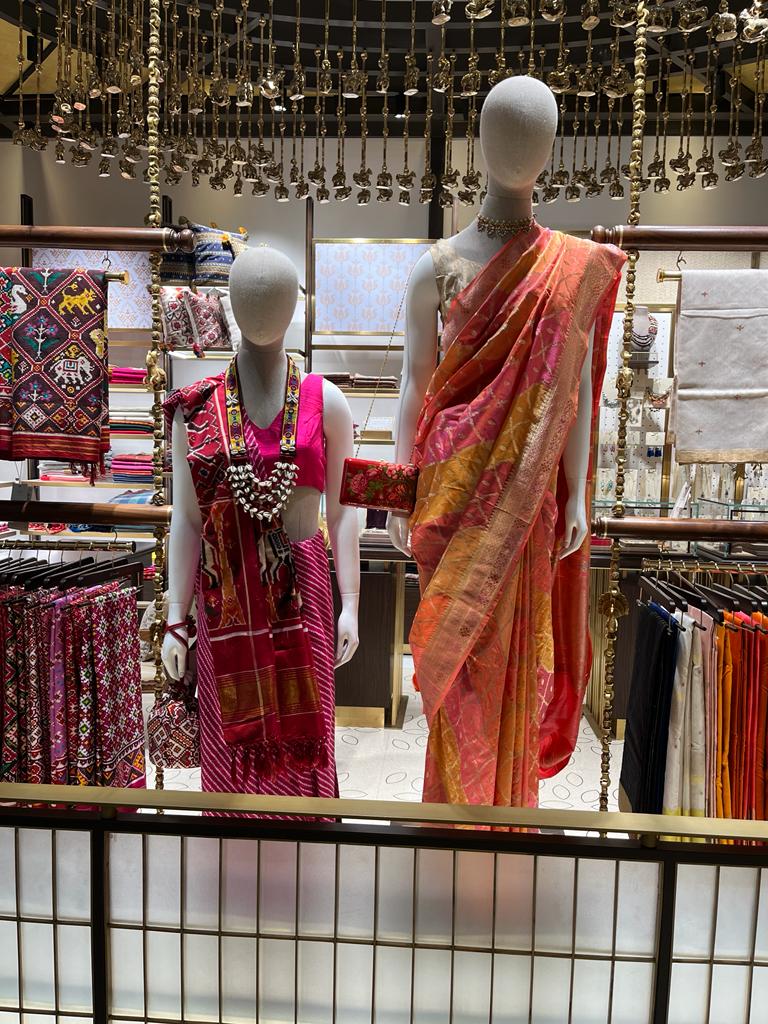
In the colourful kaleidoscope of Indian fashion, the saree stands out as a timeless symbol of elegance and tradition. The sheer diversity of weaves, patterns, and fabrics across the country reflects the rich cultural tapestry of India. Whether worn as daily attire or on special occasions, each saree is a work of art, connecting wearers to the artistic legacy of generations past. Here are seven of the coolest types of sarees from different regions, each weaving a unique tale of craftsmanship and heritage –
Banarasi Silk Saree (Uttar Pradesh)
Originating from the ancient city of Varanasi, the Banarasi silk saree is a masterpiece in silk weaving. Featuring intricate zari work and motifs, these sarees represent opulence and grandeur. The timeless Banarasi saree is often chosen for weddings and special occasions.
Kanjivaram Saree (Tamil Nadu)
Hailing from the southern state of Tamil Nadu, the Kanjivaram saree is a celebration of vibrant colours and bold patterns. These sarees are woven from pure silk and embellished with contrasting border designs. The Kanjivaram’s lustrous silk and distinctive craftsmanship make it a true South Indian classic, cherished for its regal appeal.
Patola Saree (Gujarat)
A symbol of Gujarat’s rich textile heritage, the Patola saree is known for its double ikat weave. Crafted with precision, each Patola saree is a labour-intensive masterpiece. The vibrant geometric patterns and rich colours make it a popular choice for festive occasions. These sarees are not just garments; they are woven stories of cultural pride and artistry.
Chanderi Saree (Madhya Pradesh)
The Chanderi saree, with its lightweight texture and sheer elegance, originates from Chanderi in Madhya Pradesh. With delicate zari work and intricate motifs, these sarees are woven from silk and cotton. Perfect for both formal and casual wear, Chanderi sarees embody the grace and simplicity that characterize Indian craftsmanship.
Paithani Saree (Maharashtra)
Maharashtra’s pride, the Paithani saree, is renowned for its peacock and flower motifs. Woven with vibrant silk threads and adorned with gold or silver zari, these sarees are a visual delight. The distinctive pallu and border designs make Paithani sarees a cherished attire for Maharashtrian weddings and cultural events.
Baluchari Saree (West Bengal)
The Baluchari saree, rooted in the weaving traditions of West Bengal, is known for its detailed depictions of mythological scenes. Woven on traditional jala looms, these sarees are a testament to the artistic finesse of Bengal’s weavers. The elaborate pallu narrates stories from epics like the Ramayana and Mahabharata, adding a narrative to the ensemble.
Muga Silk Saree (Assam)
The Muga Silk saree, originating from Assam, is woven from the golden silk produced by the Muga silkworms. Sarees with traditional Assamese motifs like flowers, animals, and geometric patterns are known for their natural sheen and durability. Muga Silk sarees are not just garments; they reflect Assam’s biodiversity and age-old silk traditions.


Leave a Reply